A design dialogue with Yonoh
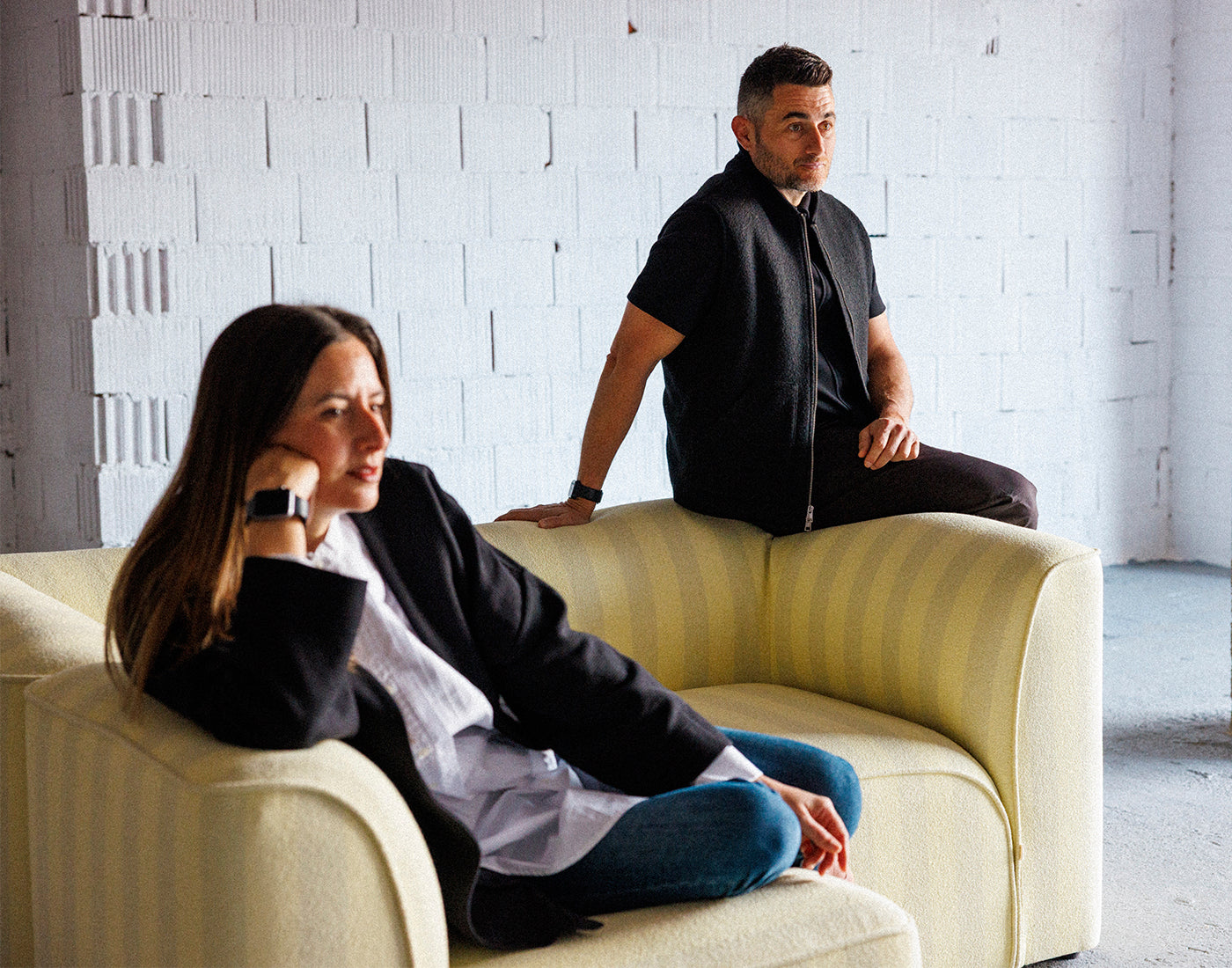
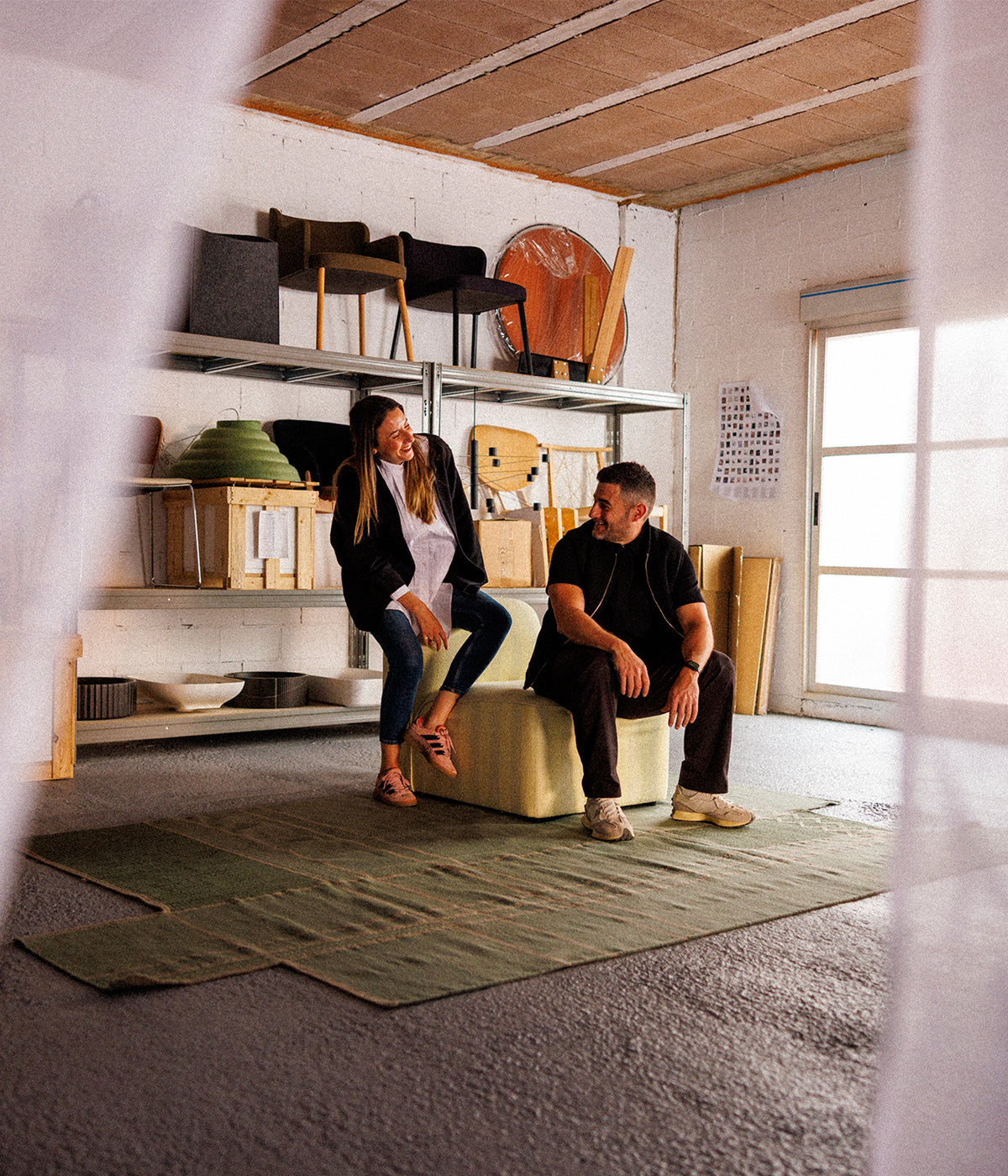
In celebration of Yonoh’s 20th anniversary, we visited founders Clara del Portillo and Alex Selma at their creative studio in Valencia, Spain.
Over a few days shaped by conversations and shared reflections, we experienced the city alongside the studio, gaining a closer understanding of their way of working while capturing fragments of their universe as it unfolds.

The past
Gain an insight into Yonoh’s beginnings and the people behind the studio. Yonoh is not only about design, but also about Clara and Alex as individuals, and the experiences and values that have shaped the studio over the years.
Looking back, where do you think your interest in design and creativity first took root?
We believe many designers share a similar mindset from an early age: a constant curiosity to observe their surroundings and a natural need to interpret the world in their own way. Over time, we realised that one of the defining traits of a creative mind is the impulse to deviate from the usual path. Even when you know the most direct route, you often choose a different one, simply to discover, to experience new sensations, to see things from a different perspective. That way of understanding the world has been with us from the very beginning.
Was there a moment, place, person or feeling that made you think: this is what I want to dedicate my life to?
Alex: In my case, it was almost a matter of destiny. From a very young age, I knew I would end up in a creative and technical field. It could have been architecture or fine arts, but industrial design appeared at exactly the right moment, combining the artistic and the technical in a very natural way for me.
At first, I studied without a clear direction, but I vividly remember a specific day during my final year, sitting in the car, when I realised I had to decide what I wanted to do with my future. That was when I made a very conscious decision: to open my own product design studio. From that point on, although the path was not easy, everything made sense. I am fully committed to that life project.
How did your paths cross, and what led you to create Yonoh together?
We met in 2004 at an exhibition of young designers, at the very beginning of our careers. At that time, each of us had our own personal project, but collaboration came naturally. Two years later, we decided to take the step and found Yonoh together. Twenty years have passed since then, and we are still here.
What was the dream back then?
It was very simple: to dedicate ourselves to product design and make a living from it. At that time, Valencia had a strong furniture industry, largely made up of small companies. This allowed us to start, learn and grow professionally.
With the 2008 crisis, many of those companies disappeared, but we will always be grateful to those who allowed us to learn from the very basics. They taught us how to be creative with very little, something that has profoundly shaped the way we work.
When you think about the early years of the studio, what stands out the most today?
The difficulty of getting started, and, in reality, of sustaining yourself. Even within an active industrial network, it was not easy for companies to place their trust in two young designers. It took us a long time to consolidate a solid studio.
Those early years were, above all, an exercise in resilience: holding on to passion and enthusiasm, and continuing to insist. That period lasted longer than we expected, but it shaped us deeply and remains one of the most defining chapters of our story.
What did those early years teach you?
Above all, they taught us never to lose enthusiasm for our work. That attitude became part of our DNA and, fortunately, remains very much alive today
We also learned how to make the most of very limited resources. We worked with companies producing wooden furniture in a very simple way, without advanced technologies. This forced us to truly understand each production process, the real capabilities of each manufacturer, and to design accordingly. That way of working remains one of our foundations.
Can you point to a project or moment that helped define Yonoh as a studio?
It is difficult to choose just one, but our first major turning point was a parasol designed for an outdoor brand that no longer exists. That project, called Nenúfar, allowed us to work with aluminium for the first time and to explore a more technical language.
The parasol received several awards, including a National Young Designers Award and recognition from AD as Emerging Designers of the Year. It was the moment we felt that our efforts were beginning to be recognised. Not so much for the media exposure, but because it gave us the strength to keep pursuing our dream.

The present
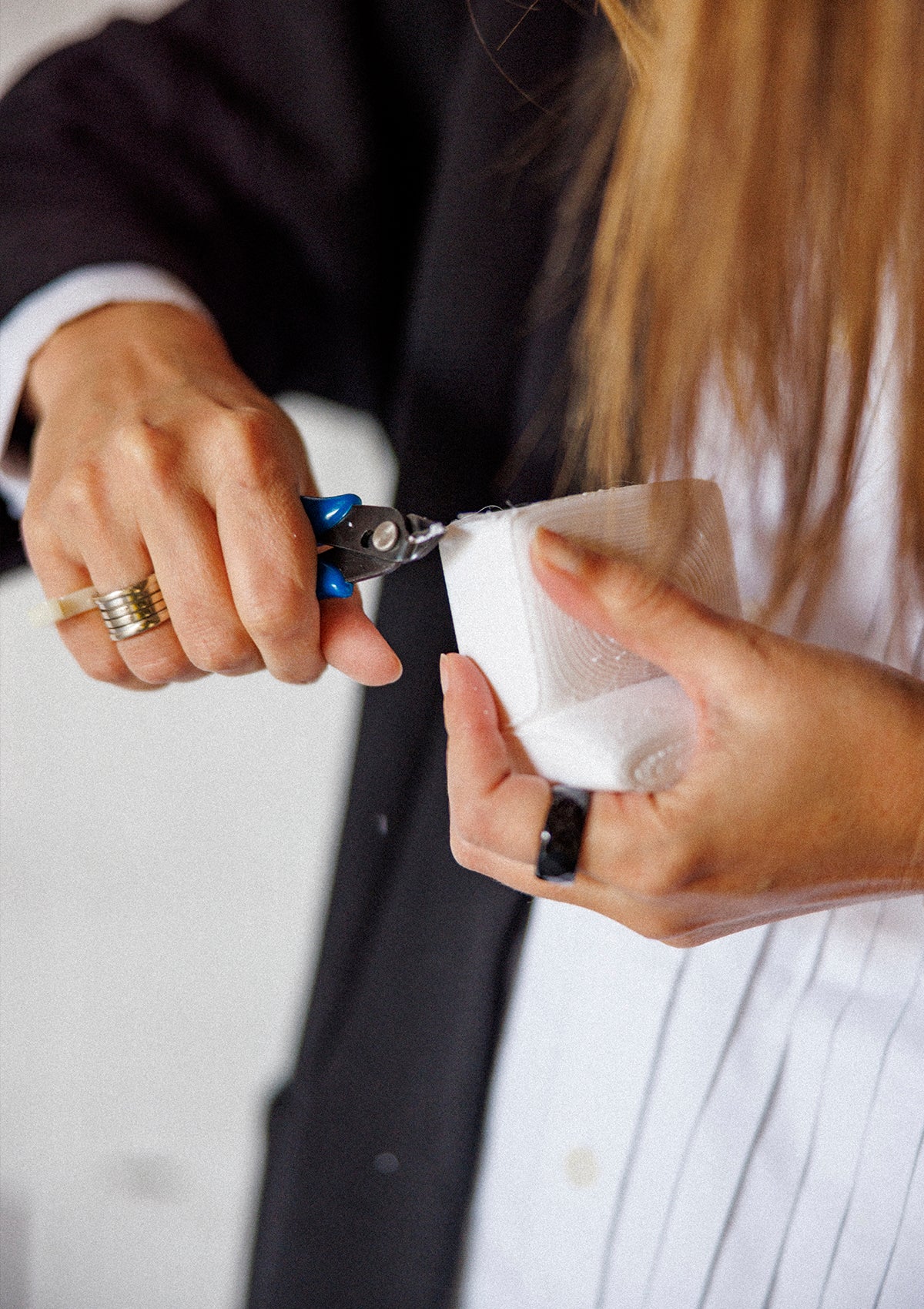
A studio shaped by experience, where the process today is more direct and refined, yet the fundamental approach to design remains the same.
How would you describe Yonoh today compared to when you first started?
At its core, we are exactly the same. The main difference is experience. Today, we have a clearer understanding of what we want to do and how we want to do it. But our personality and our approach to projects remain unchanged. We still face design with the same curiosity, commitment and personal involvement as when we started.
What has changed, and what has remained the same?
What has remained is probably the most important: we are still two creatives working closely and personally on every project. Some time ago, we decided not to grow as a studio, to remain as we are, so we could continue designing every piece ourselves. We never wanted to become managers or CEOs; we wanted to remain designers.
What has changed is our maturity and confidence, something that only comes with time. It allows us to work with greater agility and precision. What once required a long process is now more direct and refined.
Who do you design for? When you create a new piece, who do you imagine living with it?
The first filter is always ourselves. We ask whether we would accept the piece in our own lives, whether we would use it, and whether we would enjoy it. Even if the design is not intended for a domestic setting, the question remains the same: would I live with this object?
At the same time, we think carefully about each company we design for, how they work, their identity and who they address. We value listening closely to our clients, as they know their needs well. Interpreting this context through our own perspective is essential to our process.
How has your approach to furniture design evolved over the years? Do you feel more intuitive, more confident or more open than before?
We have always trusted our own judgement. The difference is that, in the beginning, it was harder for companies to trust us. In that sense, we remain the same.
We approach every project, regardless of scale, with the same enthusiasm and level of commitment. We develop each design according to our ideals, and even if we sometimes move slightly away from the initial brief, we find it impossible not to deliver what we believe to be the best possible solution.
Sometimes we get it right, sometimes we don’t, but we don’t know how to work in any other way.
What do you hope people feel when they live with one of your designs?
For us, it is enough that people enjoy the object. It does not need to be their favourite piece or an iconic design. If it fulfils its function in a sober, honest, and long-lasting way, we are satisfied.
We are not interested in creating art pieces, but in designing products made to last. Objects that, ideally, could be passed from parents to children. That idea particularly excites us.
Inspiration
The inspiration behind Yonoh’s creative ideas arises from encounters with their surroundings and a constant curiosity about form, function and everyday details.
Do you actively seek inspiration, or does it tend to appear along the way?
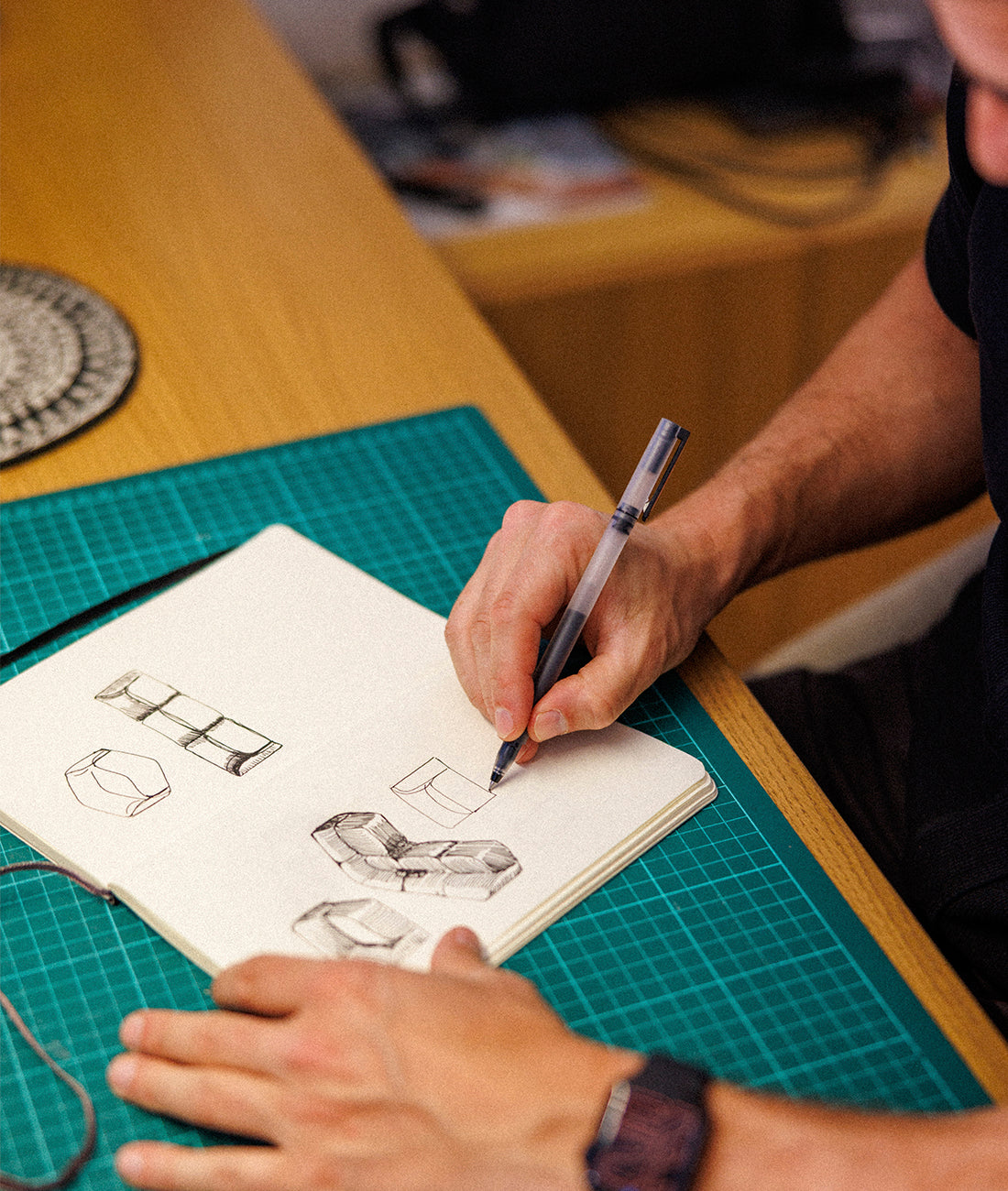
Most of the time, it appears along the way. For us, the key is to work and draw a lot. Over time, you build a kind of pantry of ideas, concepts that stay with you, waiting for the right moment. When the right project arrives, many of these ideas naturally fall into place, and the design takes shape quickly.
If you do seek inspiration, where do you usually find it?
Primarily through observation. Usually, you have a brief in mind and begin reflecting on it, always with a notebook and a pen close by. The spark can appear at any moment: observing architecture, in nature, while travelling, or in a small everyday detail.
It is something that can be trained. It does not run out. The more you practise it, the easier it becomes to find those connections.
What is inspiring you at the moment?
At the moment, we find a lot of inspiration in architecture, both formally and structurally. We are particularly interested in how large-scale constructive systems are resolved, and how those principles can be translated to smaller objects.
Are there any particular design movements or eras that influence you?
We do not feel tied to a specific era or movement. We are interested in many things. In the studio, we tend to approach design rationally, focusing on objects that are functional and well-balanced between form and technical resolution.
We are increasingly drawn to constructive details, those points where design becomes almost invisible but is very well resolved. When the technical solution is well thought out, form emerges naturally and becomes more compelling.
Looking at your current practice, what is capturing your attention these days?
We are particularly interested in what we describe as smart design. We are not interested in creating sculptures. We are interested in industrial design that is well resolved from the inside out, from the logic of the object itself, its function, its manufacturing process and its real use.
The future
A look ahead at Yonoh’s development and the directions they continue to explore, where new production techniques and improved solutions help shape their work going forward.
When you think about the future, what excites you most about Yonoh?
We are excited to continue along the same path. To explore new production techniques, to make better designs each time, and to keep growing as a studio in the way we always have: slowly, without big leaps.
We have truly enjoyed the journey so far and hope to enjoy it just as much in the future. Always with goals in mind and with a desire to keep learning. Designing a watch, for example, is something that would really excite us.
Looking ahead, what are some of the things you still dream of creating but haven’t yet?
That watch is still pending. Over the years, we have fulfilled many of our ambitions. We once dreamed of designing cutlery, urban lighting, or even modular houses, and today those projects are part of our trajectory.
There are always ideas, big or small, that continue to spark a special kind of excitement.
What has been most important for you to keep creating and enjoying the process over the years?
Seeing how, little by little, we have managed to achieve things that once felt out of reach. Designing injection-moulded chairs, developing office furniture with a high level of technical complexity, or finding innovative solutions that have helped products perform very well in the market.
These are the kinds of milestones that once seemed unattainable, and they are what we continue to value most. They motivate us to keep moving forward.
What advice would you give to young designers who dream of starting their own studio?
Be consistent and do not give up. Product design is not an easy path. In our case, it took nearly ten years to consolidate the studio.
Hopefully, it will take them less, but perseverance is key.

DESIGNS BY YONOH